The effects of homelessness in the lives of U.S. veterans and the difficulties of becoming a part of society post-military.
FAYETTEVILLE, Ark.— At the Fayetteville Salvation Army Shelter, the living arrangements resembled those of a college dorm. Storage consisted of one small stand-up locker. There, Courtney Schrock and her two sons lived. The smell of urine and feces were putrid, and the space was gloomy. “You could tell people hadn’t showered in a long time,” Schrock said.
The environment was filled with children crying, people mumbling and moaning, loud fights, and people “tweaking out on meth,” Schrock said. “They would try to come and hold the boys and wouldn’t take no for an answer. Boundaries didn’t really exist in their minds.”
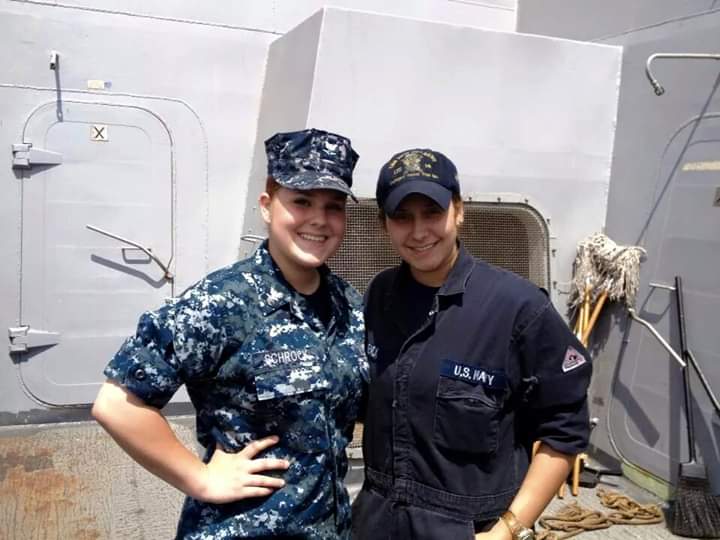
Schrock is a veteran who served in the Navy for five years. She was a petty officer third-class who was in charge of things like fixing motors and cleaning oil spills in the bilges.
She said that she was used to living a life of structure, serving her country the best she knew how, without having to worry about where she would live or if she would have food to eat.
While serving, she lost her kidney due to untreated kidney disease and her time was cut short. She was no longer deployable after her nephrectomy. When she was released, she was unaware of the many resources available to her, which led her and her family down a stressful path.

This issue is familiar for too many U.S. veterans. There are over 37,000 veterans in a given day who are experiencing homelessness in the U.S., according to National Alliance to End Homelessness. Not only that, but these individuals deal with other aspects of post-military life such as Post Traumatic Stress disorder and other mental health issues.
In Arkansas alone, there are around 240 veterans who are homeless, according to the United States Interagency Council on Homelessness. John Gallagher, chair of the board of directors of the Northwest Arkansas Continuum of Care, which is a non-profit organization that is dedicated to ending homelessness in Northwest Arkansas, said that homelessness is “significantly elevated among individuals who have served in the U.S. military.”
Gallagher said there are many reasons behind the problem at hand that include mental health issues as well as “aspects of military culture—importantly an emphasis on self-reliance and dealing with adverse situations” that in turn “may discourage help-seeking among some veterans.”
Asking for help is not encouraged in the military. “There is a level of mental toughness that you need to overcome any obstacle during extreme adversity,” Josh Medina, a Washington County Veterans Service officer and president of the Northwest Arkansas Veterans Coalition, said. Once you are out of the service, Medina explained that the level of “suck-it-up-edness” is gone, but the pride remains. He said it is important for individuals to realize that “diligence in your health isn’t weakness.”
Schrock said pride was a driving force behind the choices she made. “I didn’t talk about what I was going through,” she said. “It was really overwhelming.”
Medina said, though homelessness is a very big problem within the veteran community, it must also be made clear that “homelessness, for the most part, is just as much an issue of helping people through mental health issues.”
Yvette Schrock, Courtney’s mother, said her daughter went through years of hardship due to the less-than-ideal choices that were made and said it is hard as a mother watching her daughter “go down a self-destructing path and not being able to help.”
Postpartum depression, unplanned pregnancies, an abusive marriage, alcohol and drug abuse and addiction, unemployment, homelessness. These are things Schrock experienced for many years, and with bridges being burned between most of her family and friends due to loss of trust and lack of communication, she had no one to turn to.

“We lived in hotels. We did that for almost six to seven months,” she said. Schrock worked at a factory job at Pinnacle Foods in Fayetteville, Ark., to pay the hotel bills, but she later lost her job because she could not continue to afford any kind of childcare for her two boys and needed to stay with them. She had no one else to watch them. “That’s when I went to the Salvation Army,” she said.
After living at the Salvation Army Shelter from May 2019 until Oct. 2019, she found Adrian DaVila at St. Francis House in Fayetteville, Ark., as well as many other resources she was not aware of previously. St. Francis House provides rent assistance and many other resources for individuals and families.
“When she was at the shelter, she struggled with getting services she needed,” DaVila said. “Either because she wasn’t getting the paperwork in time, or she didn’t manage her time to follow through on it.”
The Northwest Arkansas community is working together “to address this issue by working together via coordinated entry programs,” DaVila said. “If they access any homelessness service” through one of the local programs, “someone can connect them to the By Name List.” He said that would allow for service providers to reach out to individuals who are experiencing situations similar to Courtney’s.
Gallagher said they are continuing to develop “strategic partnerships between the U.S. Department of Veteran Affairs, veteran-oriented non-profits, and non-profit/governmental agencies that address homelessness and behavioral health conditions.”
Schrock now lives with her two boys in housing apartments provided by St. Francis House. She said St. Francis House has given her direction that she did not have before and “resources to get you where you want to go. You just have to do it.”
DaVila said Schrock is finally finding her place again in society. “She has, since becoming housed, worked on getting into VA Healthcare, is doing very well at work, and is working to get rid of her debt,” DaVila said. “I have watched her go from feeling very lost to becoming more self-empowered. She has done that. I couldn’t be more proud of her progress.”
Yvette Schrock said she has seen a lot of positive growth in her daughter, and though they struggled to mend their relationship for many years, they are “looking forward to rebuilding” their relationship and their family. “The most important thing I think to remember through all of this is, addiction is ugly, and unfortunately you can’t help someone until they are ready,” Yvette said.
Schrock expressed her frustration towards the issue regarding homelessness for veterans and said she hopes her experiences can help others who are experiencing similar situations. “I think homelessness for veterans is an issue,” she said. “Partly because of pride, but also because we don’t know where to turn to. Where do you turn to?”
 Anna McKinney|University of Arkansas Journalism Student
The Transition Into Civilization CAREFUL HERE. THIS IS PROBLEMATIC BECAUSE IT IMPLIES CIVILIZATION DOESN’T EXIST IN THE COUNTRIES WHERE WE FIGHT. CIVILIZATION IS EVERYWHERE EVEN IF IT DOESN’T LOOK LIKE THE UNITED STATES.
Posted byannaemckinney1February 29, 2020Posted inFeature Writing
The effects of homelessness in the lives of U.S. veterans and the difficulties of becoming a part of USE AMERICAN SOCIETY INSTEAD
civilization post-military.
Courtney Schrock, left, on board the USS New Orleans LPD 18 on March 29, 2013.
THESE PHOTOS ARE FINE BUT YOU NEED SOME THAT YOU TAKE
OOPS. FIX: FATETTEVILLE, Ark.— Courtney Schrock currently YOU ALMOST NEVER NEED THE WORD ‘CURRENTLY.’ YOU’VE GOT THE PRESENT TENSE TO MAKE THE POINT FOR YOU. lives with her two boys in housing apartments provided by St. Francis House NWA.
VAGUE. AND TOO SOON. GIVE US MORE PRESENT DAY. WE NEED A SCENE. Prior to this, she was unaware of the resources available to her, which led her and her family down a stressful path.
STORY NEEDS NUT GRAF. WHAT IS ABOUT? REMEMBER YOU’RE WRITING A NEWS FEATURE. HOW DOES THIS TIE INTO A NEWS EVENT OR TREND?
She said that she was used to living a life of structure, serving her country the best she knew how, without the worry about where she would live or if she would have food to eat.
The Navy was all she knew for five years. PARAPHRASE. YOU OWN THE FACTS:“I was an electrician. I was a petty officer third-class,” Courtney said. “I fixed generators on the ships, I fixed motors, I was in charge of cleaning oil spills in the bilges.” There, Courtney said all of life’s resources were available and “in our faces” the entire time.
The moment she was released from the military after losing a kidney, all of those resources were lost with it.
Courtney Schrock, right, with her grandfather Dave Peck, left, on graduation day from bootcamp. Great Lakes, Chicago. 2012.
In a dorm-style shelter WAIT. YOU MEAN A HOMELESS SHELTER? WHERE? WHEN? AND WHY WAS SHE DISCHARGED? BECAUSE SHE GOT SICK? IS THAT EVEN LEGAL? WAS SHE UNABLE TO WORK? WHAT ABOUT DISABILITY? WHY COULDN’T SHE GO BACK TO WORK AFTER RECOVERING? MANY UNANSWERED QUESTIONS with three different group rooms—One for men, one for women, and one for families—Courtney and her two sons lived in a shelter. The smell of urine and feces were putrid and the space was gloomy. “You could tell people hadn’t showered in a long time,” Courtney LAST NAME ONLY ON SECOND REFERENCE. FIX THROUGHOUT said.
Storage consisted of one small stand-up locker. She slept in a full-sized bed with her 1-year-old son in her right arm and her 2-year-old son in her left. “The sounds were mumbling, moaning, snoring, arguing, shuffling, children crying,” Courtney said. “After dinner, the boys and I would typically stay in our room because the homeless overflow was so bad.” HOW DID IT GET TOTHIS POINT? WHERE WAS HER FAMILY?
The environment was filled with loud fights and people “tweaking out on meth,” Courtney said. “They would try to come and hold the boys and wouldn’t take no for an answer. Boundaries didn’t really exist in their minds.”
“When she was at the shelter, she struggled with getting services she needed,” Adrian DaVila, Courtney’s case GOOD SOURCE manager at St. Francis House WHERE IS THIS? said. “Either because she wasn’t getting the paperwork in time, or she didn’t manage her time to follow through on it.”
FOR LEDE, START WTIH HER AS HOMELESS WITH CHILDREN. GIVE US WHEN AND WHERE. AND TELL US SHE IS A VETERAN DISCHARGED FOR BLAH BLAH REASONS. THEN GIVE US NUT GRAF. EXPERTS. ETC.
THEN, GO BACK IN TIME AND TAKE US MORE THROUGH SCHROCK,USING HER STORY TO ANSWER QUESTIONS ABOUT THIS TREND, AND PROVIDING MORE EXPERTS/DATA/ETC
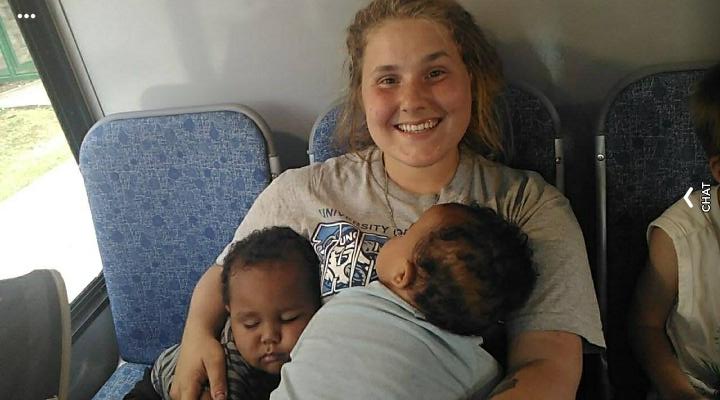
Courtney Schrock, middle, and her two sons using transit provided by St. Francis House NWA. July 2019.
This issue is familiar for too many U.S. veterans. There are over 37,000 veterans in a given day who are experiencing homelessness in the U.S., according to National Alliance to End Homelessness. Not only that, but these individuals also carry a lot of baggage NOT A KIND TERM. PEJORATIVE. RE-PHRASE that causes Post Traumatic Stress Disorder and other mental health issues. THIS IS NUT GRAF. MOVE UP.
In Arkansas alone, there are around 240 veterans who are homeless, according to the United States Interagency Council on Homelessness. John Gallagher, chair of the board of directors of the Northwest Arkansas Continuum of Care, which is a non-profit organization that is dedicated to ending homelessness in Northwest Arkansas, said that homelessness is “significantly elevated among individuals who have served in the U.S. military.” GOOD SOURCE MOVE UP
Gallagher said there are many reasons behind the problem at hand that include mental health issues as well as “aspects of military culture—importantly an emphasis on self-reliance and dealing with adverse situations” that in turn “may discourage help-seeking among some veterans.”
Asking for help is not encouraged in the military. “There is a level of mental toughness that you need to overcome any obstacle during extreme adversity,” Josh Medina, a Washington County Veterans Service officer and president of the Northwest Arkansas Veterans Coalition, said. Once you are out of the service, Medina explained that the level of “suck-it-up-edness” is gone, but the pride remains with them. He said it is important for individuals to realize that “diligence in your health isn’t weakness.” GOOD.
Courtney said pride was a driving force behind the choices she made. “I didn’t want to talk about what I was going through,” she said. “But where do you turn to?”
Courtney Schrock and her son riding bikes at the Salvation Army Shelter. July 2019
Medina said, though homelessness is a very big problem within the veteran community, it must also be made clear that “homelessness, for the most part, is just as much an issue of helping people through mental health issues.”
Yvette Schrock, Courtney’s mother, said her daughter went through years of hardship due to the less-than-ideal choices that were made and said it is hard as a mother watching her daughter “go down a self-destructing path and not being able to help.” GOOD SOURCE
Postpartum depression, unplanned pregnancies, an abusive marriage, alcohol and drug abuse, unemployment, homelessness. These are things Courtney experienced for many years, and with bridges being burned between most of her family and friends, EXPLAIN she had no one to turn to. “We lived in hotels. We did that for almost six to seven months,” she said. Courtney worked at a factory jobWHERE/ to pay the hotel bills, but she later lost her job. WHY? DID HER MENTAL HEALTH MAKE IT DIFFICULT TO KEEP A JOB? “That’s when I went to the Salvation Army,” she said.
After living at the Salvation Army Shelter from May 2019 until Oct. 2019, she found Adrian DaVila at St. Francis House WHERE as well as many other resources she was not aware of previously. St. Francis House provides rent assistance and many other resources for individuals and families. GOOD
The Northwest Arkansas community is working together “to address this issue by working together via coordinated entry programs,” DaVila said. “If they access any homelessness service” through one of the local programs, “someone can connect them to the By Name List.” He said that would allow for service providers to reach out to individuals who are experiencing situations similar to Courtney’s. GOOD JOB WEAVING THIS INTO HER STORY.
Gallagher said they are continuing to develop “strategic partnerships between the U.S. Department of Veteran Affairs, veteran-oriented non-profits, and non-profit/governmental agencies that address homelessness and behavioral health conditions.”
Courtney said that St.Francis House has given her direction she didn’t have before and “resources to get you where you want to go. You just have to do it.”
Courtney is finally finding her place in society. “She has, since becoming housed, worked on getting into VA Healthcare, is doing very well at work, and is working to get rid of her debt,” DaVila said. “I have watched her go from feeling very lost to becoming more self-empowered. She has done that. I couldn’t be more proud of her progress.”
Yvette said she has seen a lot of positive growth in her daughter, and though they struggled to mend their relationship for many years, they are “looking forward to rebuilding” their relationship and their family. “The most important thing I think to remember through all of this is addiction WHAT ADDICTION? TO WHAT? IS THAT INTRODUCED EARLIER IN STORY? is ugly and unfortunately you can’t help someone until they are ready,” Yvette said.
Courtney said she knows that she can’t take back all of the things that happened after being released from the Navy, but she is moving forward from her past. “It’s not something I’m proud of,” Courtney said. Even though “it took a lifetime,” she is finally finding her independence again “by the grace of God.” FLAT. DOESN’T HIT THE NOTE OF BEING A HOMELESS VETERAN.
GOOD REPORTING. I LOOK FORWARD TO YOUR REVISION.
LikeLike
FAYETTEVILLE, Ark.— At the Fayetteville Salvation Army Shelter, the living arrangements resembled those of a college dorm. Storage consisted of one small stand-up locker. There, Courtney Schrock and her two sons lived. The smell of urine and feces were putrid, and the space was gloomy. “You could tell people hadn’t showered in a long time,” Schrock said.MUCH STRONGER DETAILS. YOU ENGAGE THE SENSES!
The environment was filled with children crying, people mumbling and moaning, loud fights, and people “tweaking out on meth,” Schrock said. “They would try to come and hold the boys and wouldn’t take no for an answer. Boundaries didn’t really exist in their minds.” EXCELLENT
NEEDS TRANSITION. IT WAS A DEMORALIZING TRANSITION FOR SCHROCK, A VETERNA WHO SERVED FIVE YEARS IN THE NAVY FIXING BLAH BLAH Schrock is a veteran who served in the Navy for five years. She was a petty officer third-class who was in charge of things like fixing motors and cleaning oil spills in the bilges. GOOD JOB CONDENSING
She said that she was used to living a life of structure, serving her country the best she knew how, without having to worry about where she would live or if she would have food to eat.
While serving, she lost her kidney due to untreated kidney disease and her time was cut short. She was no longer deployable after her nephrectomy. When she was released, she was unaware of the many resources available THIS IS PUBLIC RELATIONS SPEAK. WHICH RESOURCES DO YOU MEAN? THE FOOD AND HOUSING? to her, which led her and her family down a stressful path. BE MORE CONCRETE. DID SHE HAVE NO MONEY IN THE BANK? NO FAMILY TO HELP HER? AND BE CLEAR THAT THE “STRESSFUL PATH” RESULTED IN HER LIFE IN THE SHELTER
Courtney Schrock, right, with her grandfather Dave Peck, left, on graduation day from bootcamp. Great Lakes, Chicago. 2012. Photo by: Courtney Schrock.
This issue is familiar for too many U.S. veterans. There are over 37,000 veterans in a given day who are experiencing homelessness in the U.S., according to National Alliance to End Homelessness. Not only that, but these individuals deal with other aspects of post-military life such as Post Traumatic Stress FINISH CAPITALIZING THE TERM:disorder and other mentalHYPHENATE COMPOUND MODIFIERS health issues.
In Arkansas alone, there are around 240 veterans who are homeless, according to the United States Interagency Council on Homelessness. GOOD. MUCH MORE SPECIFIC John Gallagher, chair of the board of directors of the Northwest Arkansas Continuum of Care, which is a non-profit organization that is dedicated to ending homelessness in Northwest Arkansas, said that homelessness is “significantly elevated among individuals who have served in the U.S. military.”
Gallagher said there are many reasons behind the problem at hand that include mental health issues as well as “aspects of military culture—importantly an emphasis on self-reliance and dealing with adverse situations” that in turn “may discourage help-seeking among some veterans.”
Courtney Schrock, middle, and her two sons using transit provided by St. Francis House NWA. July 2019. Photo by: Courtney Schrock.
Asking for help is not encouraged in the military. “There is a level of mental toughness that you need to overcome any obstacle during extreme adversity,” SAID Josh Medina, a Washington County Veterans Service officer and president of the Northwest Arkansas Veterans Coalition, DON’T SPLIT UP THE VERB FROM THE SUBJECT: said. Once you are out of the service, Medina explained that the level of “suck-it-up-edness” is gone, but the pride remains. He said it is important for individuals to realize that “diligence in your health isn’t weakness.”
Schrock said pride was a driving force behind the choices she made. “I didn’t talk about what I was going through,” she said. “It was really overwhelming.”
YOU’RE SKIPPING OVER THE DETAILS OF HOW IT HAPPENED, HOW SHE LANDED IN THE SHELTER OUT OF THE MILITARY. THERE IS A STORY IN BETWEEN.
Medina said, AWKWARD SYNTAX though homelessness is a very big problem within the veteran community, it must also be made clear that “homelessness, for the most part, is just as much an issue of helping people through mental health issues.”
Yvette Schrock, Courtney’s mother, said her daughter went through years of hardship due to the less-than-ideal choices NO. AVOID THE EUPHEMISMS AND SOFT LANGUAGE. TELL US SPECIFICALLY WHAT HAPPENED. WAS IT DRUGS? that were made and said it is hard as a mother watching her daughter “go down a self-destructing path and not being able to help.”
Postpartum depression, unplanned pregnancies, an abusive marriage, alcohol and drug abuse and addiction, unemployment, homelessness. GOOD. DON’T SHY FROM THIS. BUILD THEM INTO THE CHRONOLOGY OF HER STORY These are things Schrock experienced for many years, and with bridges being burned between most of her family and friends due to loss of trust and lack of communication, she had no one to turn to.
Courtney Schrock and her son riding bikes at the Salvation Army Shelter. July 2019. Photo by: Courtney Schrock.
“We lived in hotels. We did that for almost six to seven months,” she said. Schrock worked at a factory job at Pinnacle Foods in Fayetteville, Ark., to pay the hotel bills, but she later lost her job because she could not continue to afford any kind of childcare for her two boys and needed to stay with them. She had no one else to watch them. “That’s when I went to the Salvation Army,” she said.
After living at the Salvation Army Shelter from May 2019 until Oct. 2019, she found Adrian DaVila at St. Francis House in Fayetteville, Ark., EXPLAIN WHAT THE ST. FRANCIS HOUSE IS HERE as well as many other resources she was not aware of previously. St. Francis House provides rent assistance and many other resources for individuals and families.
“When she was at the shelter, she struggled with getting services she needed,” DaVila said. “Either because she wasn’t getting the paperwork in time, or she didn’t manage her time to follow through on it.” GOOD JOB FINDING SOURCES TO BACK UP HER STORY
The Northwest Arkansas community is working together “to address this issue by working together via coordinated entry programs,” DaVila said. “If they access any homelessness service” through one of the local programs, “someone can connect them to the By Name List.” He said that would allow for service providers to reach out to individuals who are experiencing situations similar to Courtney’s.
Gallagher said they are continuing to develop “strategic partnerships between the U.S. Department of Veteran Affairs, veteran-oriented non-profits, and non-profit/governmental agencies that address homelessness and behavioral health conditions.”
Schrock now lives with her two boys in housing apartments provided by St. Francis House. She said St. Francis House has given her direction that she did not have before and “resources to get you where you want to go. You just have to do it.”
DaVila said Schrock is finally finding her place again in society. “She has, since becoming housed, worked on getting into VA Healthcare, is doing very well at work, WHERE IS SHE WORKING NOW and is working to get rid of her debt,” DaVila said. “I have watched her go from feeling very lost to becoming more self-empowered. She has done that. I couldn’t be more proud of her progress.”
Yvette Schrock said she has seen a lot of positive growth in her daughter, and though they struggled to mend their relationship for many years, they are “looking forward to rebuilding” their relationship and their family. “The most important thing I think to remember through all of this is, addiction is ugly, and unfortunately you can’t help someone until they are ready,” Yvette said.
Schrock expressed her frustration towards the issue regarding homelessness for veterans and said she hopes her experiences can help others who are experiencing similar situations. “I think homelessness for veterans is an issue,” she said. “Partly because of pride, but also because we don’t know where to turn to. Where do you turn to?”
LOTS OF GOOD ADDITIONS HERE. THANKS FOR THE REVISION.
LikeLike