A single mother tells the story of her life in Mexico and her courage to build a new life in America for herself and her three children.

Found in the dried-up fields of San Luis Potosí, Mexico in the 1980s were many farmers tending to what crops they had, hoping they would have enough harvest to sell in order to make ends meet for their families. There, 15-year-old Carmen Aguilar worked in the fields with her father, Reyes Martínez. She could be found tending to the farm animals, picking beans, peppers, and corn with her father on his land. Goats sauntered around while the cows looked for anything that looked edible.
Today, Carmen lives with her supportive husband, Gil Gonzalez, growing their business working for Herbalife Nutrition together. Her husband said she has “become more open-minded and sociable” throughout the years. He also said she has been able to put all of her focus and energy into her family and her business. “She has become self-sufficient thanks to her hard work and the abundance of work here,” Ariana Aguilar, daughter to Carmen, said. “Their lifestyle changed a lot after shifting careers, and they enjoy what they do.”
Betsabe Gonzalez is a family-friend who has known Carmen for 14 years. They met at Carmen and Gil’s wedding in 2006 and have been friends since. Gonzalez said she has watched Carmen grow in her business and benefit the Hispanic community. “Business-wise, she was probably one of the first Hispanics that had a small place to offer her supplement products,” Gonzalez said. “She is always helping others.”
Carmen explains, though, that life was not always like this. Her responsibilities as a young girl looked like those of the men who were working around her. She was the eldest daughter and had no older brothers. She “pretty much worked like a man,” she said. Growing up with her parents, she said she would be pulled out of school for months at a time during harvest season. She did not mind the outside work. In fact, Carmen preferred to be outside getting her hands dirty instead of doing housework.
She said this was the life she was used to—But it was not the life she wanted. She was tired of it and knew she needed a change. Among those changes was finding a husband.

Immigration in the United States boomed in the 1980s, bringing in nearly 800,000 immigrants from Latin America and Asia. Hundreds of thousands of lives beyond the border of Mexico long for a better life, for a new start. Many continue to be turned away.
Today, programs like Canopy NWA in Fayetteville, Ark., are providing resettlement resources for not only refugees, but immigrants just like Carmen and her family. Hannah Lee is the director of community engagement at Canopy NWA. In January, the organization launched their Integration Unit, which allows them to “work with other immigrant communities,” she said. It is the biggest unit within the organization, according to the Canopy NWA website.
Carmen found a husband named Juan. She said he was an older man who was very abusive and an excessive drinker. “Though I was poor with my parents, I had everything I needed,” she said. With Juan, she did not. She became pregnant with her first son, Miguel, and soon after gave birth to two more children.
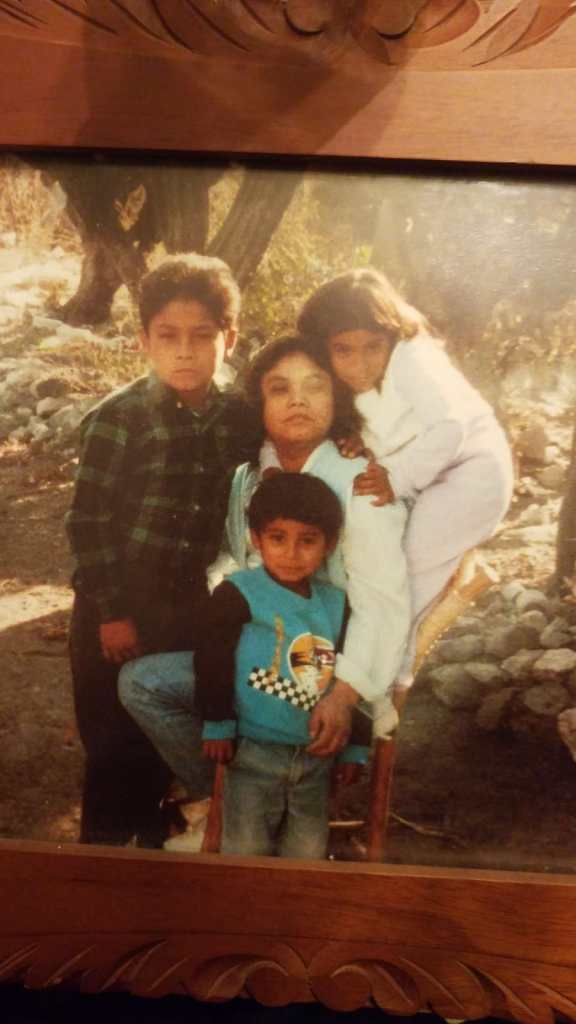
Speaking of her life, she recalls the lack of financial stability and their issues with food insecurities. She said she did everything she could to provide for her children, but she said she will always remember when her youngest son brought home a small cactus, telling her through tears, “make this for me because I’m really hungry and I can hear my gut shaking.”
Miguel Aguilar, 39, is the oldest son of Carmen. He lives Broken Arrow, Okla. He remembers some of their struggles and how she told him when visiting them in Mexico, “you and your sister and your brother are going to stay here with grandma and grandpa,” and how she promised she would come back for him and his siblings when she could afford to. Now as a parent himself, he said he understands how difficult that must have been for her.
Carmen said she finally gave Juan an ultimatum – either he came back for them or he would never hear from her or his children again. He relented. Juan came back, but they quickly realized that there was no future if they stayed. With a heavy heart, she decided to make the treacherous journey across the desert into the what they considered the promised land, albeit with Juan as her guide.

She then explained how after they were detained by border control for two days, she crossed over into America and found herself at a beautiful ranch in Texas— “I remember they had a lot of peacocks, so it was really nice,” she said.
In 2018 alone, approximately 800,000 immigrants applied for naturalization in the U.S., and most immigrate from Mexico, according to Pew Research Center. Lee said the program “wants to continue building and expanding so that our communities in NWA.” Lee also said the hope is to continue to “expand our services to other immigrant communities,” so that many can begin new lives as American citizens.
Carmen said she worked many jobs throughout this time in her life. Her jobs included nannying during the day and working at a restaurant in the evenings owned by the family she nannied for in Houston, Texas, working at an agriculture field in Stilwell, Okla., landing a job with Tyson Foods in Fort Smith, Ark., and then eventually owning her own grocery store in Danville, Ark. She said her children were to stay in Mexico until she could save up enough money to bring them to America.
Even today, Carmen becomes very emotional when speaking of her journey, especially when talking about her father and his fight with bone cancer. She was working in Fort Smith, Ark. at the time. Carmen traveled back to Mexico to donate blood to him, but she said he passed away four months later.

The process of obtaining residency is troubling. Carmen said she experienced that first-hand. She said scheduling issues within the system made for a long process for her children, but when she was able to welcome them into the U.S., she said she felt a large stress taken off of her shoulders.
Miguel said she is a strong woman and “found a way to finally keep that promise” of bringing them to the United States. Carmen said many doubted her as a single mother. “I didn’t need a man,” she said. That was her proudest moment.

 Anna McKinney|University of Arkansas Journalism Student
The Journey to a New Start-Immigration to the U.S.
NEEDS DECK
Found in the dried-up fields of Mexico WHERE IN MEXICO? SURELY NOT ALL FIELDS IN MEXICO WERE DRIED UP FOR THE WHOLE DECADE. BE SPECIFIC in the 1980s were many FARMERS? CHILDREN? USE SPECIFIC NOUNS tending to what crops they had, hoping they would have enough harvest to sell in order to make ends meet. As a 15-year-old girl, Carmen Aguilar WORKED IN THE FIELDS WITH HER FATHER, NAME, IN THE PROVINCE OF BLAH BLAH. could be found working in the field WHAT WAS CROP? with her father on his land. Goats sauntered around while the cows looked for anything that looked edible.
I UNDERSTAND THAT HER BACKGROUND PROPELLED HER IMMIGRATION BUT WE NEED TO START IN THE PRESENT DAY AS JOURNALISTS. WHY DO WE CARE ABOUT HER TODAY? WHAT’S THE ANGLE? WHAT ARE YOU SAYING ABOUT HER? START THERE. GIVE US HER BACKGROUND LATER.
The responsibilities of Carmen looked like those of the men who were working around her. She was the eldest daughter and had no older brothers. She “pretty much worked like a man.” SHE SAID. Growing up with her parents, she would be pulled out of school for months at a time during harvest season. She did not mind the outside work. In fact, Carmen preferred to be outside getting her hands dirty instead of doing housework.
This was the life Carmen was used to—But this was not the life she wanted. She was tired of it and knew she needed a change. Among those changes was finding a husband.
Immigration in the United States was booming USE SIMPLE PAST WHENEVER POSSIBLE. BOOMED in the 1980s, bringing in nearly 800,000 immigrants from Latin America and Asia. Fast forward to 2020 and you will see that America is now the country with the lowest refugee numbers. REFUGEES AND IMMIGRANTS ARE NOT THE SAME THING. President Trump has slashed the number down to a YOU CAN HAVE A TAKE ON YOUR PROFILE SUBJECT BUT AVOID EDITORIALIZING ABOUT POLITICS: messily 18,000 in 2020. Hundreds of thousands of lives beyond the SPELLING: boarder of Mexico long for a better life, for a new start. Now, many will be turned away. NOT JUST NOW. IT’S BEEN HAPPENING FOR YEARS. BE SPECIFIC.
WE HAVE A PROBLEM HERE. YOU’RE WRITING THIS STORY ABOUT AN UNDOCUMENTED WORKER BUT IN YOUR NUT GRAF, YOU’RE WRITING ABOUT REFUGEES, WHO ARE DOCUMENTED AND HAVE SPECIAL STATUS. YOU CANNOT USE ONE AS AN EXAMPLE OF THE OTHER.
Today, programs around the nation like Canopy NWA in Fayetteville, Ark., are providing resettlement resources for immigrants and refugees just like Carmen and her family. Hannah Lee is the director of community engagement at Canopy NWA. She explained that, though Texas has refused to accept refugees, 42 of the 50 states are in favor of welcoming refugees and immigrants. WHAT ABOUT THE REST OF THEM. ALSO YOU CANNOT RELY ON HANNAH LEE. DO YOUR OWN RESEARCH. ENSURE THAT NUMBER IS CORRECT. Lee said the program “wants to continue building and expanding so that our communities in NWA, and hopefully one day, our state as a whole, welcomes and equips refugees to build new lives,” so that everyone has a chance to achieve the American dream.
Carmen Aguilar, 36. U.S., 1997.
Not knowing her life would be turned upside down after meeting him, she found a husband named Juan. He was an older man who was very abusive and an excessive drinker. She explained through tears that once she had married and moved in with Juan, she realized “though she was poor with her parents, she had everything she needed.” With Juan, she did not. She became pregnant with her first son, Miguel, and soon after gave birth to two more children.
They were struggling in their village as work became sparse. Carmen and Juan traveled to a coastal city in Northern Mexico for work, but they continued to hit a dead end. Juan decided to immigrate to America without her and their children and sent them back to their village with nothing to live off of. They only had her parents and each other. They struggled with lack of financial stability and food insecurities. She did everything she could to provide for her children, but she said she will always remember when her youngest son brought home a small cactus and told her with tears in his eyes, “make this for me because I’m really hungry and I can hear my gut shaking.”
Carmen finally gave Juan an ultimatum – either he came back for them or he would never hear from her or his children again. He relented. Juan came back, but they quickly realized that there was no future if they stayed. With a heavy heart, she decided to make the treacherous journey across the desert into the WHAT THEY CONSIDERED THE promised land, albeit with Juan as her guide. She had to leave her three children behind with her parents because they couldn’t afford passage for everyone. After encountering the immigration patrol and being detained for two full days, they finally released her and Juan. Once she crossed over into America, she found herself at a beautiful ranch— “I remember they had a lot of peacocks, so it was really nice,” she said. NEED TO CONDENSE BACKSTORY. GIVE US MORE OF THE PRESENT.
In America, Juan continued his abusive ways. Carmen worked many jobs throughout, which included nannying during the day and working at a restaurant in the evenings owned by the family she nannied for WERE IN THE STATES DID THEY LIVE? WHY? . Her children were to stay in Mexico until she could save up enough money to bring them to America.
Miguel Aguilar, the oldest son, HOW OLD IS HE NOW? AND WHERE IS HE? BY STARTING THE STORY IN PRESENT, WE WILL MORE READILY HAVE THESE ANSWERS remembers some of their struggles and how she told him “you and your sister and your brother are going to stay here with grandma and grandpa,” and how she promised she would come back for them when she could. Now as a parent himself, he said he understands how difficult that must have been for her.
Carmen Aguilar, 29, with her three children. Mexico, 1990.
Carmen began working for Tyson Foods in Fort Smith, Ark. Tears were shed AVOID PASSIVE VOICE as she spoke of her father EVEN TODAY, SHE CRIES WHEN SPEAKING OF HER FATHER, who became very ill with bone cancer while she was in Fort Smith. She traveled back to Mexico to donate blood to him, but once it was time to return to America, she recalled the moment when her youngest son ran after her truck yelling, “don’t leave us again!” It was time for her children to join her in America. BUT WHY? IT NEVER OCCURRED TO HER THAT HER CHILDREN MISSED HER? WAS IT TOO MUCH TO BEAR TO SEE IN PERSON? BE SPECIFIC.
The process of obtaining residency for them was troubling. Scheduling issues within the system made for a long process. When she was able to welcome her kids into the CLICHE. SHE CAN CALL IT THIS, BUT NOT YOU: land of opportunity, she felt a large stress taken off of her shoulders. Miguel said she is a strong woman and “found a way to finally keep that promise” of bringing them to the United States. Many said she couldn’t do it all on her own as a single mother, but she proved that “she didn’t need a man” in order to provide for her three children. That was her proudest moment.
Today, Carmen AVOID THESE READY-MADE PHRASES:can be found with her
TODAY CARMEN LIVES WITH HER supportive husband, Gil Gonzalez, growing their business WHAT BUSINESS? START HERE. FLIP STORY TO BREAK UP CHRONOLOGICAL STORYTELLNG AS DISCUSSED IN CLASS together. “She has become self-sufficient thanks to her hard work and the abundance of work here,” Ariana Aguilar, daughter to Carmen, said. At the end of the day, Carmen and her family “achieved their American Dream.” CLICHE.
WE NEED MORE SECONDARY SOURCES. FRIENDS WHO HAVE KNOWN THEM FOR YEARS? BUSINESS PARTNERS? INTERVIEW SPOUSE.
MOST IMPORTANTLY, MAKE SURE ALL YOUR DUCKS ARE IN A ROW. ARE YOU WRITING ABOUT UNDOCUMENTED WORKERS OR REFUGEES?
YOU’VE GOT A GOOD START HERE. SOME GOOD DESCRIPTIVE WRITING. I LOOK FORWARD TO YOUR REVISION.
Carmen Aguilar with her family at Disney World in Orlando, Fla. U.S., 2016.
Carmen Aguilar with her husband, Gil Gonzalez in Oahu, Hawaii, 2019.
Carmen Aguilar in Houston, Texas, 2019.
LikeLike
The Journey to a New Start-Immigration to the U.S.
Posted byannaemckinney1February 7, 2020Posted inFeature Writing
A single mother tells the story of her life in Mexico and her courage to build a new life in America for herself and her three children.
Carmen Aguilar, 28. U.S., 1989.
Found in the dried-up fields of San Luis Potosí, Mexico in the 1980s were many farmers tending to what crops they had, hoping they would have enough harvest to sell in order to make ends meet for their families. There, 15-year-old Carmen Aguilar worked in the fields with her father, Reyes Martínez. She could be found tending to the farm animals, picking beans, peppers, and corn with her father on his land. Goats sauntered around while the cows looked for anything that looked edible. LEDE SHOULD BE IN PRESENT DAY
Today, Carmen lives with her supportive husband, Gil Gonzalez, growing their business working for Herbalife Nutrition WHICH IS WHAT? together. Her husband said she has “become more open-minded and sociable” throughout the years. RATHER, START WITH CARMEN’S VOICE. NOT HUSBAND’S He also said she has been able to put all of her focus and energy into her family and her business. “She has become self-sufficient thanks to her hard work and the abundance of work here,” Ariana Aguilar, daughter to Carmen, said. “Their lifestyle changed a lot after shifting careers, and they enjoy what they do.” THIS SHOULD COME LOWER. TELL US INSTEAD WHO SHE IS AND WHY SHE MATTERS. WHY DOES SHE DESERVE A NEWS STORY? YOU’VE SUGGESTED BUT NOT MADE CLEAR SHE IS AN IMMIGRANT AND WE DO NOT KNOW HER LEGAL STATUS
Betsabe Gonzalez is a family-friend who has known Carmen for 14 years. They met at Carmen and Gil’s wedding in 2006 and have been friends since. Gonzalez said she has watched Carmen grow in her business and benefit the Hispanic community. WHERE “Business-wise, she was probably one of the first Hispanics WHERE? ANYWHERE? that had a small place to offer her supplement products,” Gonzalez said. “She is always helping others.”
Carmen explains, though, that life was not always like this. Her responsibilities as a young girl looked like those of the men who were working around her. She was the eldest daughter and had no older brothers. She “pretty much worked like a man,” she said. Growing up with her parents, she said she would be pulled out of school for months at a time during harvest season. She did not mind the outside work. In fact, Carmen preferred to be outside getting her hands dirty instead of doing housework.
She said this was the life she was used to—But it was not the life she wanted. She was tired of it and knew she needed a change. Among those changes was finding a husband.
Carmen Aguilar, 36. U.S., 1997.
Immigration in the United States boomed in the 1980s, bringing in nearly 800,000 immigrants from Latin America and Asia. Hundreds of thousands of lives beyond the border of Mexico long for a better life, for a new start. Many continue to be turned away.
Today, programs like Canopy NWA in Fayetteville, Ark., are providing resettlement resources for not only refugees, but immigrants just like Carmen and her family. Hannah Lee is the director of community engagement at Canopy NWA. In January, the organization launched their Integration Unit, which allows them to “work with other immigrant communities,” she said. It is the biggest unit within the organization, according to the Canopy NWA website. OKAY, BUT IS CARMEN ONE OF THESE PEOPLE? NEED TO TIE THIS TO YOUR PROFILE SUBJECT.
WORK ON STRUCTURE. NO TRANSITION HERE AND IT’S UNCLEAR WHY WE’RE COMING BACK TO THIS POINT IN TIME RATHER THAN HER IMMIGRATION STORY Carmen found a husband named Juan. She said he was an older man who was very abusive and an excessive drinker. “Though I was poor with my parents, I had everything I needed,” she said. With Juan, she did not. She became pregnant with her first son, Miguel, and soon after gave birth to two more children.
Carmen Aguilar, 29, with her three children. Mexico, 1990.
Speaking of her life, she recalls the lack of financial stability and their issues with food insecurities. She said she did everything she could to provide for her children, but she said she will always remember when her youngest son brought home a small cactus, telling her through tears, “make this for me because I’m really hungry and I can hear my gut shaking.” POWERFUL
Miguel Aguilar, 39, is the oldest son of Carmen. He lives Broken Arrow, Okla. He remembers some of their struggles and how she told him when visiting them in Mexico, “you and your sister and your brother are going to stay here with grandma and grandpa,” and how she promised she would come back for him and his siblings when she could afford to. Now as a parent himself, he said he understands how difficult that must have been for her.
Carmen said she finally gave Juan an ultimatum – either he came back for them or he would never hear from her or his children again. He relented. Juan came back, but they quickly realized that there was no future if they stayed. With a heavy heart, she decided to make the treacherous journey across the desert into the what they considered the promised land, albeit with Juan as her guide.
Carmen Aguilar with her family at Disney World in Orlando, Fla. U.S., 2016.
She then explained how after they were detained by border control for two days, she crossed over into America and found herself at a beautiful ranch in Texas— “I remember they had a lot of peacocks, so it was really nice,” she said.
In 2018 alone, approximately 800,000 immigrants applied for naturalization in the U.S., and most immigrate from Mexico, according to Pew Research Center. NO. HAVE TO GET FACTS STRAIGHT. FIRST, THE LEADING PLACE OF ORIGIN WAS ASIA. THEN, MEXICO. ALSO, “MOST” MEANS MORE THAN 50 PERCENT. BE CAREFUL IN YOUR REPORTING.https://www.ncsl.org/research/immigration/snapshot-of-u-s-immigration-2017.aspx
Lee said the program “wants to continue building and expanding so that our communities in NWA.” Lee also said the hope is to continue to “expand our services to other immigrant communities,” so that many can begin new lives as American citizens.
Carmen said she worked many jobs throughout this time in her life. Her jobs included nannying during the day and working at a restaurant in the evenings owned by the family she nannied for in Houston, Texas, working at an agriculture field in Stilwell, Okla., landing a job with Tyson Foods in Fort Smith, Ark., and then eventually owning her own grocery store in Danville, Ark. She said her children were to stay in Mexico until she could save up enough money to bring them to America.
Even today, Carmen becomes very emotional when speaking of her journey, especially when talking about her father and his fight with bone cancer. She was working in Fort Smith, Ark. at the time. Carmen traveled back to Mexico to donate blood to him, but she said he passed away four months later.
Carmen Aguilar with her husband, Gil Gonzalez in Oahu, Hawaii, 2019.
The process of obtaining residency is troubling. Carmen said she experienced that first-hand. She said scheduling issues within the system made for a long process for her children, but when she was able to welcome them into the U.S., she said she felt a large stress taken off of her shoulders.
Miguel said she is a strong woman and “found a way to finally keep that promise” of bringing them to the United States. Carmen said many doubted her as a single mother. “I didn’t need a man,” she said. That was her proudest moment.
HITS A STRANGE NOTE HERE SINCE YOU TALK EARLY ON ABOUT HER SUPPORTIVE HUSBAND AND QUOTE HIM FIRST RATHER THAN HER.
THANKS FOR THE REVISION.
Carmen Aguilar in Houston, Texas, 2019.
Share this:
LikeLike